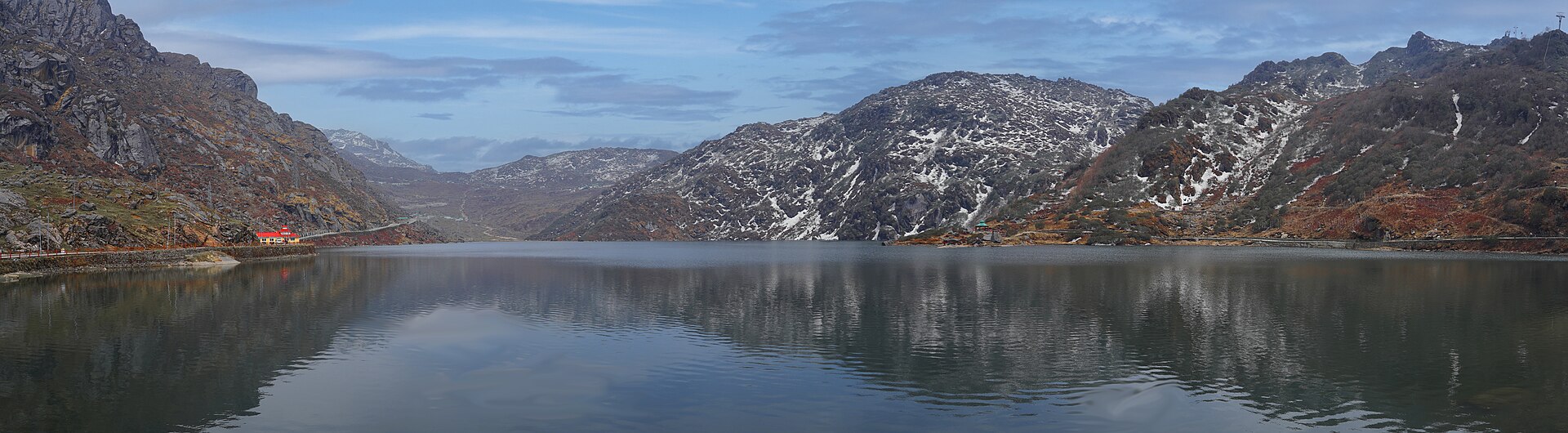
Tsomgo Lake, also called Changu Lake, is the most visited high-altitude spot near Gangtok, and winter is when many people most want to see it: snow on the slopes and, in the coldest weeks, ice on the water. The short answer for a winter trip: every visitor needs a permit, the lake is a day trip of about two hours each way from Gangtok, and snowfall can close the road at short notice, so keep your plans flexible and follow official advisories.
This guide brings together what official sources and established news outlets say about visiting Tsomgo in winter, including the recent snowfall rescues on this road. Permit rules, timings and road status change often, so please confirm the details before you travel.
Where Tsomgo Lake is and how high it sits
Tsomgo is a glacial lake in East Sikkim on the Gangtok–Nathu La road. India's national tourism website, Incredible India, gives its altitude as 12,313 feet above sea level; EastMojo has reported it at about 12,400 feet and around 38 km from Gangtok. The Gangtok district administration says the drive from Gangtok takes about 2 hours.
At this height the air is thin and cold. The district administration's page for the lake specifically asks visitors to be aware of altitude and the possibility of altitude sickness. If you have only just arrived in Sikkim, it helps to spend at least a night in Gangtok before going up.
Permits: what you need
Tsomgo Lake lies in a restricted area. According to the Gangtok district administration, special permits are required for all visitors, and only permitted vehicles may use the road. In practice, most visitors go with a registered tour operator or taxi from Gangtok that arranges the permit.
- Indian visitors can apply for permits to Tsomgo and, separately, to Nathu La. The district page notes that domestic visitors need special permits from the Tourism Department and the police check post.
- Foreign nationals need a Protected Area Permit and, according to the district administration, are not allowed beyond Tsomgo Lake. The same page says foreign nationals must visit in a group of at least two.
- Carry original ID and copies, plus passport-size photos, as your operator will usually ask for these to process the permit.
The district administration's page was last updated in December 2023, so check the current rules with the Sikkim Tourism Department or your operator before you book.
Digital QR permits are coming
In November 2025, CS Rao, Additional Chief Secretary of Sikkim's Tourism Department, announced that the state is moving permits for high-altitude and border areas online, PTI reported. Travellers to Nathu La, Tsomgo Lake, Lachen, Lachung and Zuluk would apply online and get QR-code permits, with data shared between tourism, police, transport and the Army. At the time, trials were running with a limited group of operators and no launch date had been given. Ask your operator whether your permit will be paper or QR-based.
Timings
Official sources give different visiting hours. The Gangtok district administration lists Tsomgo Lake as open 10:00 am to 4:00 pm, every day of the week, while the Incredible India page gives 7:30 am to 4:30 pm. In winter, operators often start early because weather tends to worsen in the afternoon, and you should expect to be back down before dark. Treat these hours as a guide and confirm on the day.
Is the lake frozen in winter?
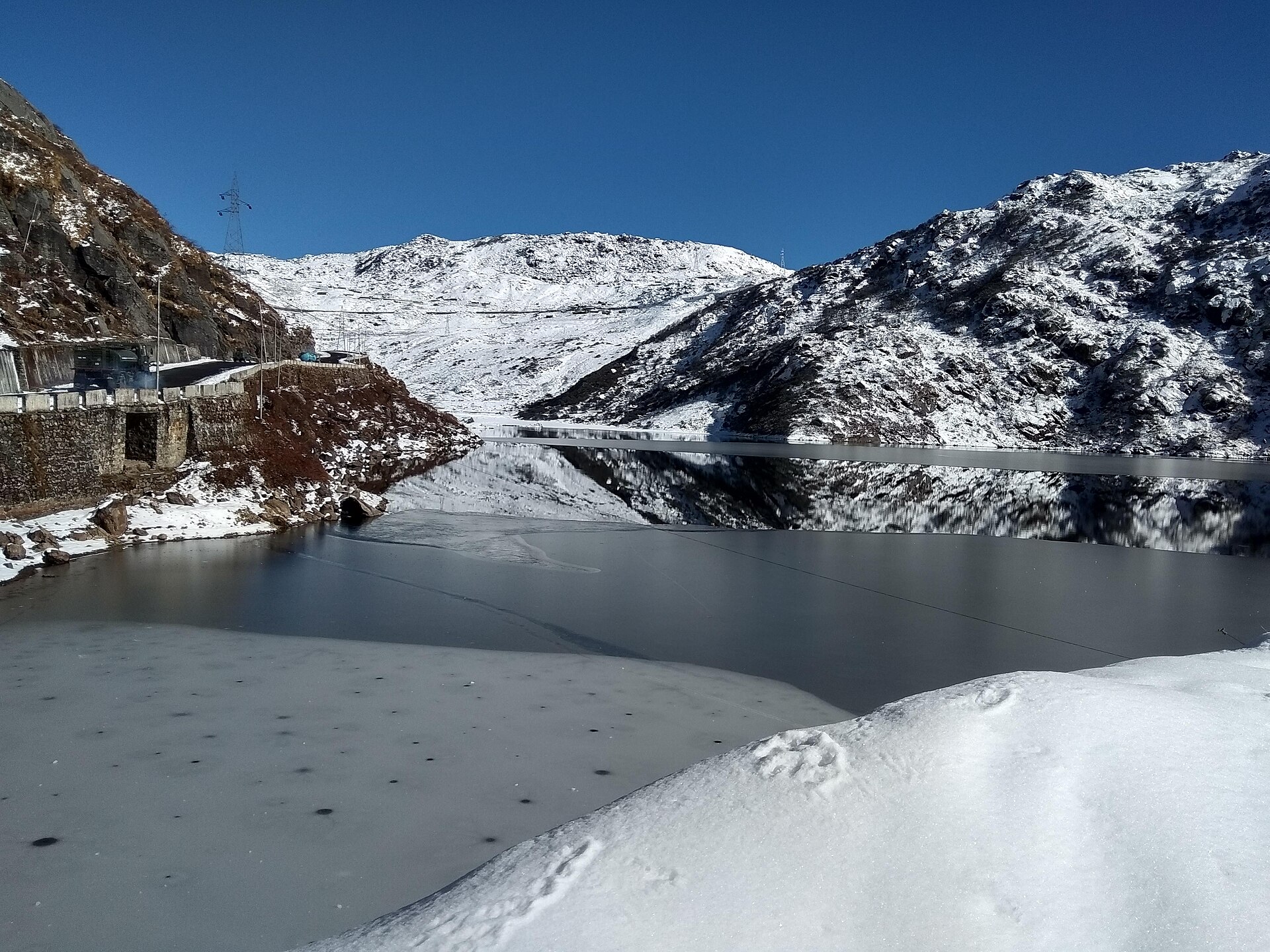
It can be. In early January 2020, EastMojo reported that Tsomgo had frozen over as temperatures dropped to around -2°C, with snow covering the surrounding area. The same outlet also ran a warning when photos of tourists standing on the thin ice spread on social media.
Our advice is simple: do not walk on the frozen lake. The ice can look solid but be thin in places, and the water beneath is extremely cold. Enjoy the view from the shore.
Snowfall closures and rescues: why flexibility matters
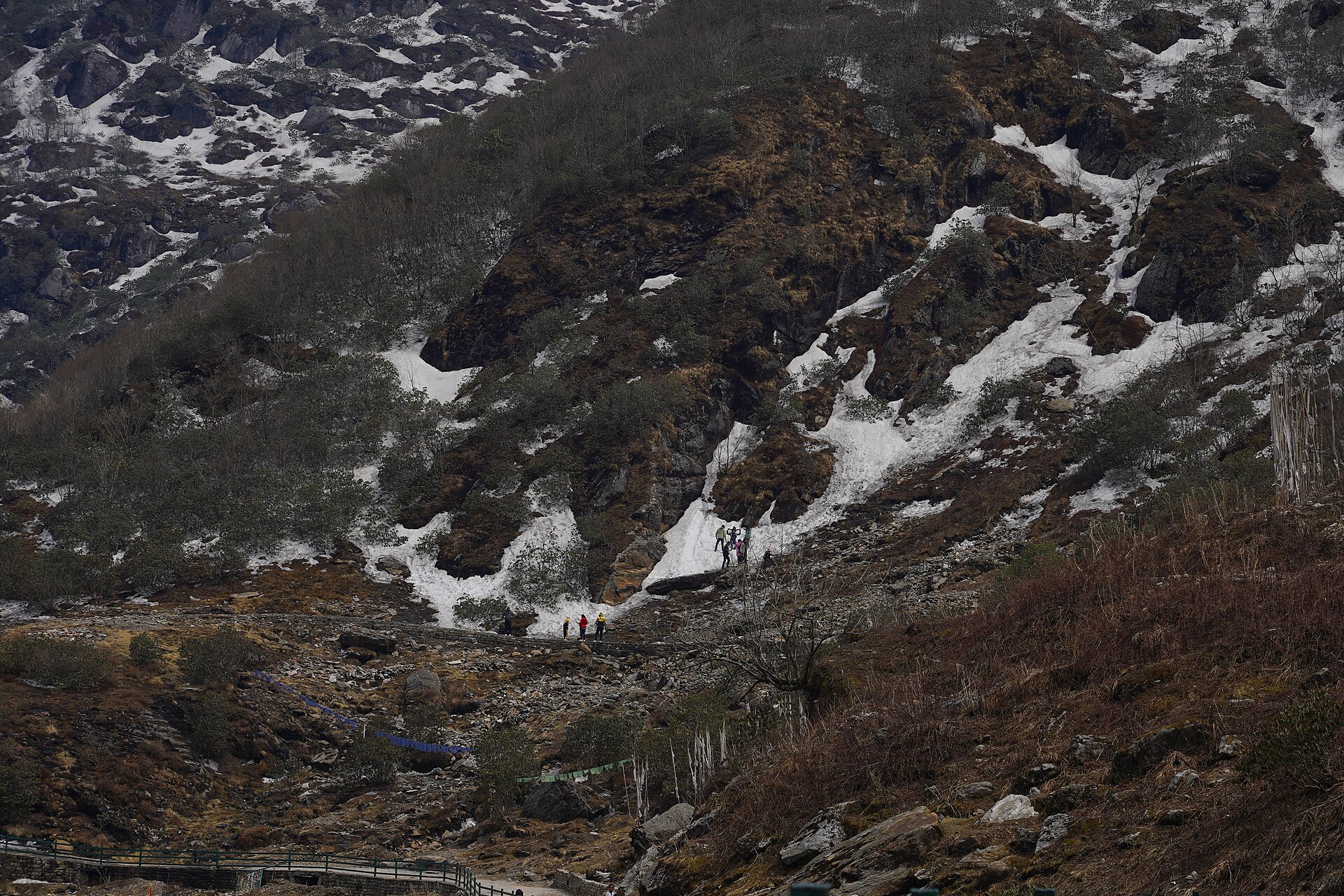
Heavy snow on this road is not rare, and it can strand large numbers of visitors in a few hours:
- December 2019: EastMojo reported that the Army rescued about 15,000 tourists stuck near Tsomgo and Nathu La after heavy snowfall, with around 300 taxis unable to move on the icy road.
- February 2026: India Today NE reported that 2,736 people in 541 tourist vehicles were stranded between 15th Mile and Tsomgo Lake after heavy snowfall in the higher reaches around Sherathang. All were rescued. The Sikkim Tourism Department asked tourists and operators to follow weather advisories strictly and to make sure vehicles carry snow chains in snowfall-prone areas.
- 12 November 2026: According to a PTI report carried by ThePrint, the Army's Trishakti Corps rescued over 900 tourists and locals stranded by heavy snowfall around Nathu La, Baba Mandir and Tsomgo Lake.
None of this means you should skip Tsomgo in winter, but it does mean you should build a spare day into your plan, check road conditions the evening before and the morning of your trip, and turn back without argument if police or the Army stop vehicles. You can follow updates on our Sikkim road status page.
A sacred lake
Tsomgo is more than a viewpoint. Incredible India notes that, according to local folklore, Sikkimese people regard the lake as the abode of protective deities. EastMojo has reported that Buddhist monks were once said to forecast the future from the colour of its water, and that jhakris (traditional faith healers) gather at the lake each year on Guru Purnima. Please keep the shore clean, carry your rubbish back with you, and be respectful around prayer flags and shrines.
What else is on the route
The Tsomgo road continues towards Nathu La, the mountain pass on the India–China border. The Gangtok district administration gives its altitude as 4,300 m and its distance as about 56 km from Gangtok, with a separate permit needed for Indian visitors only. Baba Mandir, the shrine honouring Captain Harbhajan Singh, is also on this route. Nearby is Kyongnosla Alpine Sanctuary, mentioned on the Incredible India page for the lake. In winter, the road beyond Tsomgo is the most likely stretch to close, so treat Nathu La as a bonus rather than a certainty.
At the lake itself, Incredible India mentions pony rides and stalls selling local snacks such as momos and thukpa, along with woollens.
Before you go: winter checklist
- Permit and ID: book through a registered operator a day ahead, with original ID and photos. Foreign nationals need a PAP and can go only as far as Tsomgo.
- Spare day: keep a buffer day in case the road closes for snow.
- Warm layers: thermals, a down or heavy jacket, gloves, a woollen cap and waterproof shoes with good grip.
- Sun protection: sunglasses and sunscreen, as snow glare at altitude is strong.
- Altitude: spend at least one night in Gangtok first, drink water, avoid alcohol on the day, and go back down if you feel unwell.
- Vehicle: check that your driver carries snow chains, as the Tourism Department has advised.
- Stay off the ice, and follow instructions from police and Army staff on the road.
Need a vehicle from Gangtok? See our cabs page, and use Plan your trip to fit Tsomgo into a wider Sikkim itinerary.
Sources
- Gangtok District Administration: Signature Attractions (Tsomgo Lake, Nathu La)
- Incredible India (Ministry of Tourism): Tsomgo Lake
- The Week (PTI): Sikkim set to introduce online permit system for high-altitude travel
- EastMojo: Walking on thin ice at Sikkim's Tsomgo Lake is fun, but be careful
- India Today NE: Over 2,700 tourists stranded near Tsomgo Lake rescued after heavy snowfall
- ThePrint (PTI): Army rescues over 900 tourists, locals stranded by snowfall in Sikkim's Nathula region


