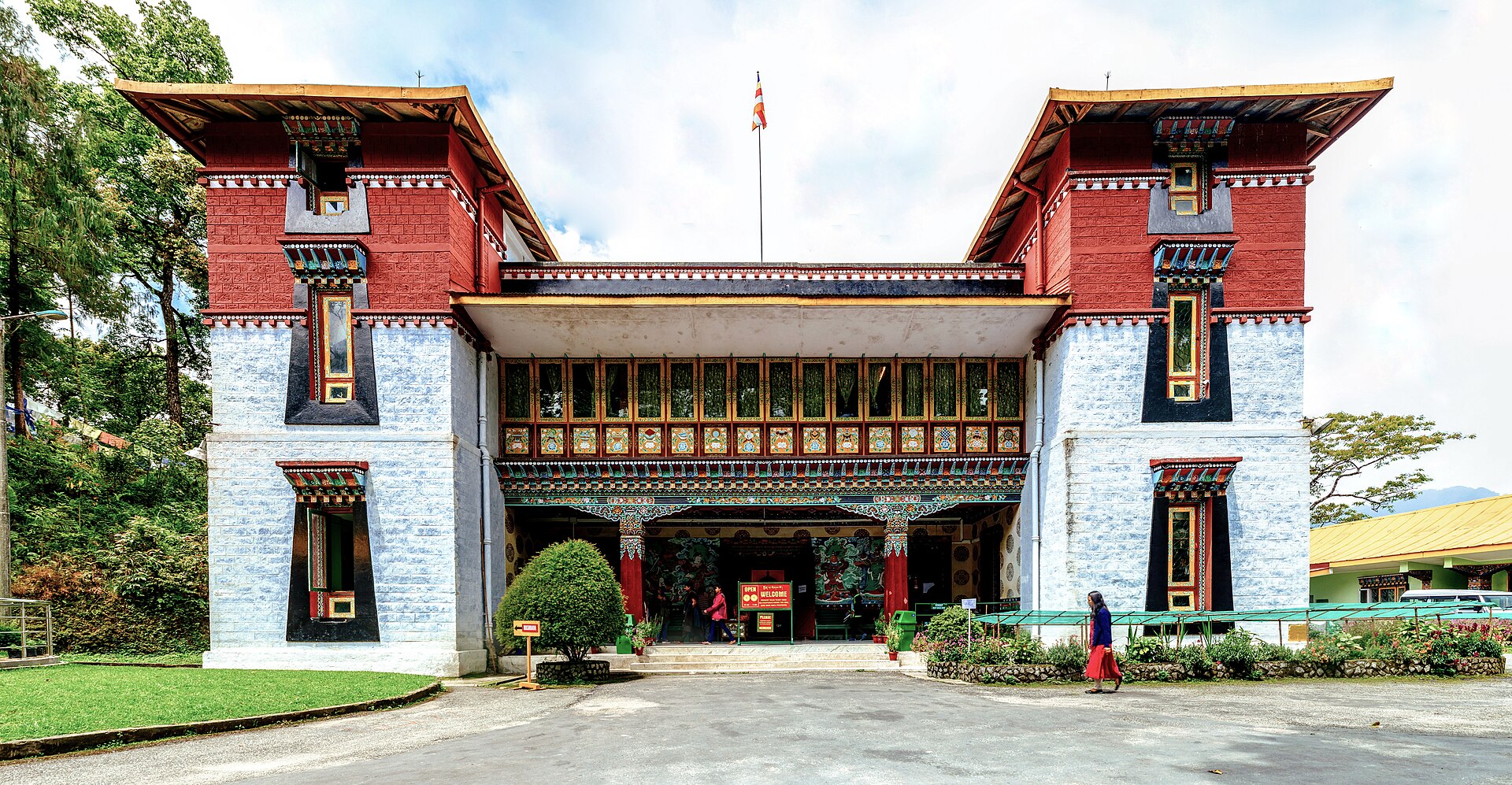
The Namgyal Institute of Tibetology (often shortened to NIT) in Deorali, Gangtok, is one of the most important heritage institutions in Sikkim. It was set up in 1958 to protect Buddhist and Tibetan texts, and today it has a museum of Himalayan Buddhist art, two libraries and a research centre. Anyone can visit.
Quick answer: according to the institute's own website (as of November 2026), it is open from 10 am to 4:30 pm, Monday to Saturday, and closed on Sundays and government holidays. Entry to the museum and the libraries costs Rs 25. Photography and video are not allowed inside the museum, and you have to take your shoes off before going in. Timings and fees can change, so call the institute before a special trip (numbers are below).
A short history
The institute's history is closely tied to the Namgyal dynasty, the Chogyals (kings) who ruled Sikkim until it merged with India in 1975. According to the institute, the 12th Chogyal, Palden Thondup Namgyal, came up with the idea and helped establish it as its Founder President. The land was donated by his father, the 11th Chogyal Tashi Namgyal, in memory of his son Paljor Namgyal.
The 14th Dalai Lama laid the foundation stone on 10 February 1957, and India's Prime Minister Jawaharlal Nehru declared the institute open on 1 October 1958.
The timing mattered. The institute says it was first set up to preserve rare texts on history, religion, literature and science that were brought out of Tibet during the political turmoil of the 1950s. Over the years the collection grew to include thangkas (painted and woven scroll paintings), statues, xylographs (texts printed from carved wooden blocks), ritual instruments and other treasures.
The building itself is worth a look. As the photo above shows, it is built in traditional Tibetan-Sikkimese style, with whitewashed walls, deep red upper storeys and painted window frames.
What you'll see in the museum
The museum is on the ground floor of the main building. The institute describes it as the first and only proper museum in Sikkim. It holds a collection of Himalayan Buddhist art:
- Statues, mostly of metal but also of wood and clay, including a large silver image of Manjushri, the bodhisattva of wisdom.
- Thangkas, including a series of five that tell the history of Sikkim and of the Namgyal dynasty. If you're interested in Sikkim's royal past, look out for these.
- Ritual objects used in Buddhist ceremonies.
- Old manuscripts.
Exhibits are labelled in Tibetan, Hindi and English, with short English descriptions. That makes the museum easy to follow even if you know little about Buddhist art. A visit can take anything from half an hour to much longer if you like reading every label.
The libraries
Most visitors only see the museum, but the libraries are the heart of the institute.
The Tibetan Library
On the first floor, the Tibetan Library has over 60,000 titles. The institute calls it one of the largest collections of Tibetan works in the world outside Tibet. It includes complete sets of the Buddhist canon:
- the Kangyur (the Buddha's teachings) in the Lhasa edition, 103 volumes
- the Kangyur in the Derge edition, 103 volumes
- the Tengyur (commentaries) in the Derge edition, 213 volumes
It also holds the collected works of major teachers such as Padma Lingpa, Mipham Rinpoche and the 5th Dalai Lama.
The General Library
The General Library is a reference library. Books can't be borrowed for home use, but photocopying is allowed, with restrictions on rare books. According to the institute, both libraries are open to everyone, which makes them useful for students and researchers as well as curious visitors.
A working research centre
NIT is more than a museum. It sponsors research on Mahayana Buddhism, religious art and related subjects, and publishes the Bulletin of Tibetology, a research journal. The latest issue listed on its website is Volume 57 (2026).
It also teaches. The institute says it has run a department of Sowa-Rigpa (the traditional Tibetan system of medicine) since 2018, and a two-year Master's programme in Buddhist and Tibetan Studies since 2019. Both are affiliated to the Central University of Sikkim.
The Governor of Sikkim is the President of the institute. In February 2025, according to Raj Bhavan (now Lok Bhavan) Sikkim, the Governor chaired a meeting of its Executive Board and General Council, where an upcoming 30-bed Sowa Rigpa hospital on the NIT premises was discussed.
Before you go
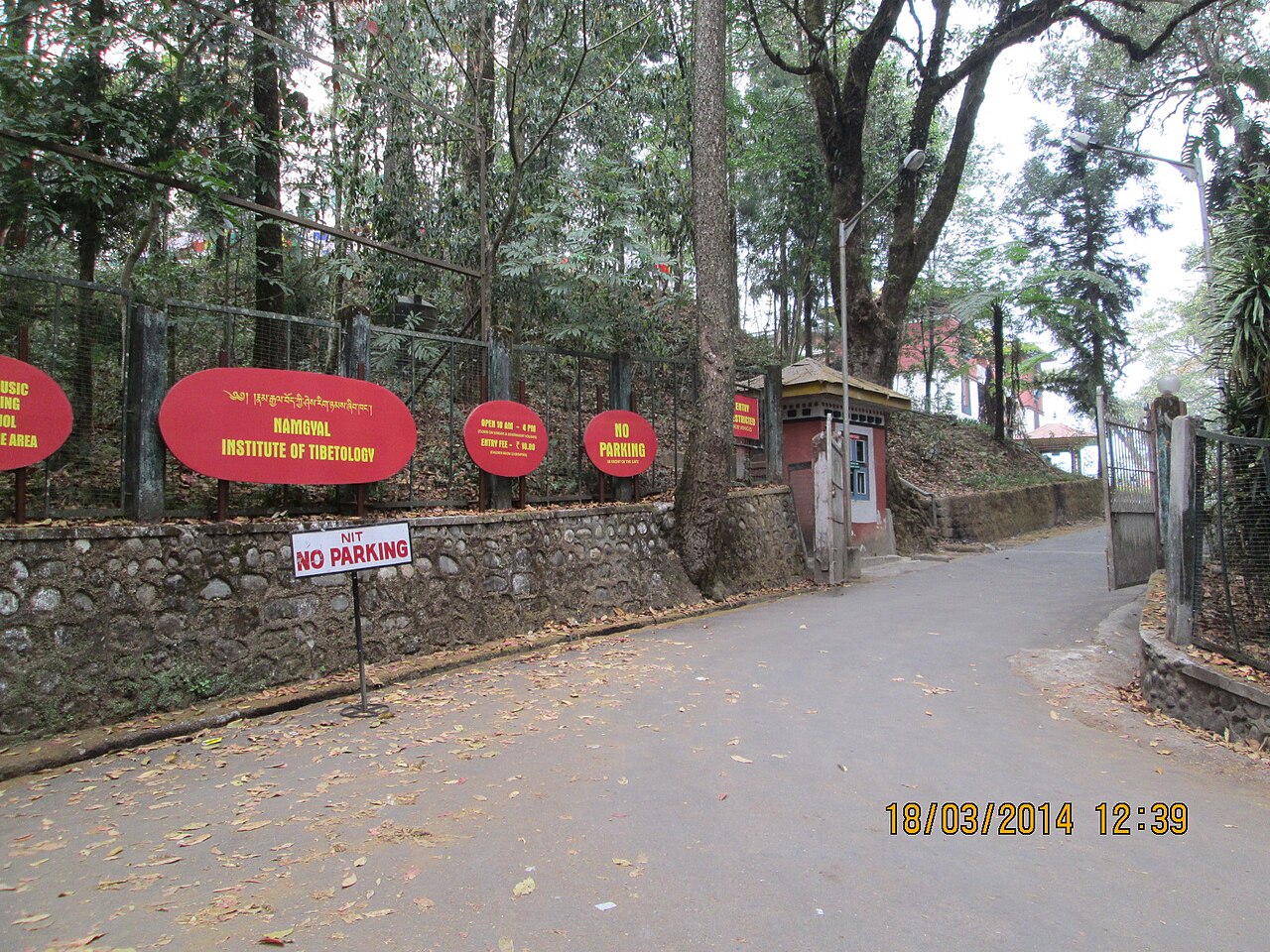
- Timings: 10 am to 4:30 pm, Monday to Saturday, according to the institute's website (November 2026). It is closed on Sundays and government holidays. The museum page adds that the museum may stay open on Sundays and Sikkim government holidays at the height of the tourist season. Incredible India, the Government of India's tourism site, lists a 4 pm closing time, so plan to arrive well before 4 pm.
- Entry fee: Rs 25 for the museum and libraries, as listed by the institute. Confirm it on the day, as fees can change.
- Rules: no shoes, no photographs and no videos inside the museum. Dress modestly and keep your voice down, as you would in a monastery.
- Contact: 03592-280822 or 03592-281525 (according to the institute's contact page). The address is Namgyal Institute of Tibetology, Deorali, Gangtok, Sikkim 737101.
- Location: Deorali, to the south of central Gangtok. A memorial park with a bronze statue of Chogyal Palden Thondup Namgyal is close by.
Getting there
The institute is within Gangtok, so it fits easily into a half-day of local sightseeing. Local taxis are the easiest way to reach Deorali from MG Marg and other parts of town. See our cabs page for options.
If you're coming from outside Sikkim, Incredible India lists Bagdogra International Airport and Pakyong Airport as the nearest airports, and New Jalpaiguri (NJP) as the nearest major railway station. From there it's a road journey up to Gangtok. Check current road status before you set out, and use our trip planner to fit the institute into a wider itinerary.
Why it's worth a visit
Many visitors to Gangtok head straight for the viewpoints and the high lakes. Spending an hour at the Namgyal Institute of Tibetology gives you the background that makes the rest of Sikkim make sense. The monasteries you'll see, the thangkas on their walls and the story of the Chogyals are all explained here, in one quiet building among the trees in Deorali.
Sources
- Namgyal Institute of Tibetology (official website): Home
- Museum – Namgyal Institute of Tibetology
- Library – Namgyal Institute of Tibetology
- Contact Us – Namgyal Institute of Tibetology
- Executive Board and General Council Meeting of Namgyal Institute of Tibetology Held at Raj Bhavan (10.02.2025), Lok Bhavan Sikkim
- Discover Tibetan Culture at Namgyal Institute of Tibetology in Gangtok | Incredible India
Photo credits
- Cover photo: Subhrajyoti07 / Wikimedia Commons, CC BY-SA 4.0 (source)
- Photo 1: KaranKapoor1314 / Wikimedia Commons, CC BY-SA 4.0 (source)
- Photo 2: Rudolph.A.furtado / Wikimedia Commons, CC0 (source)


